

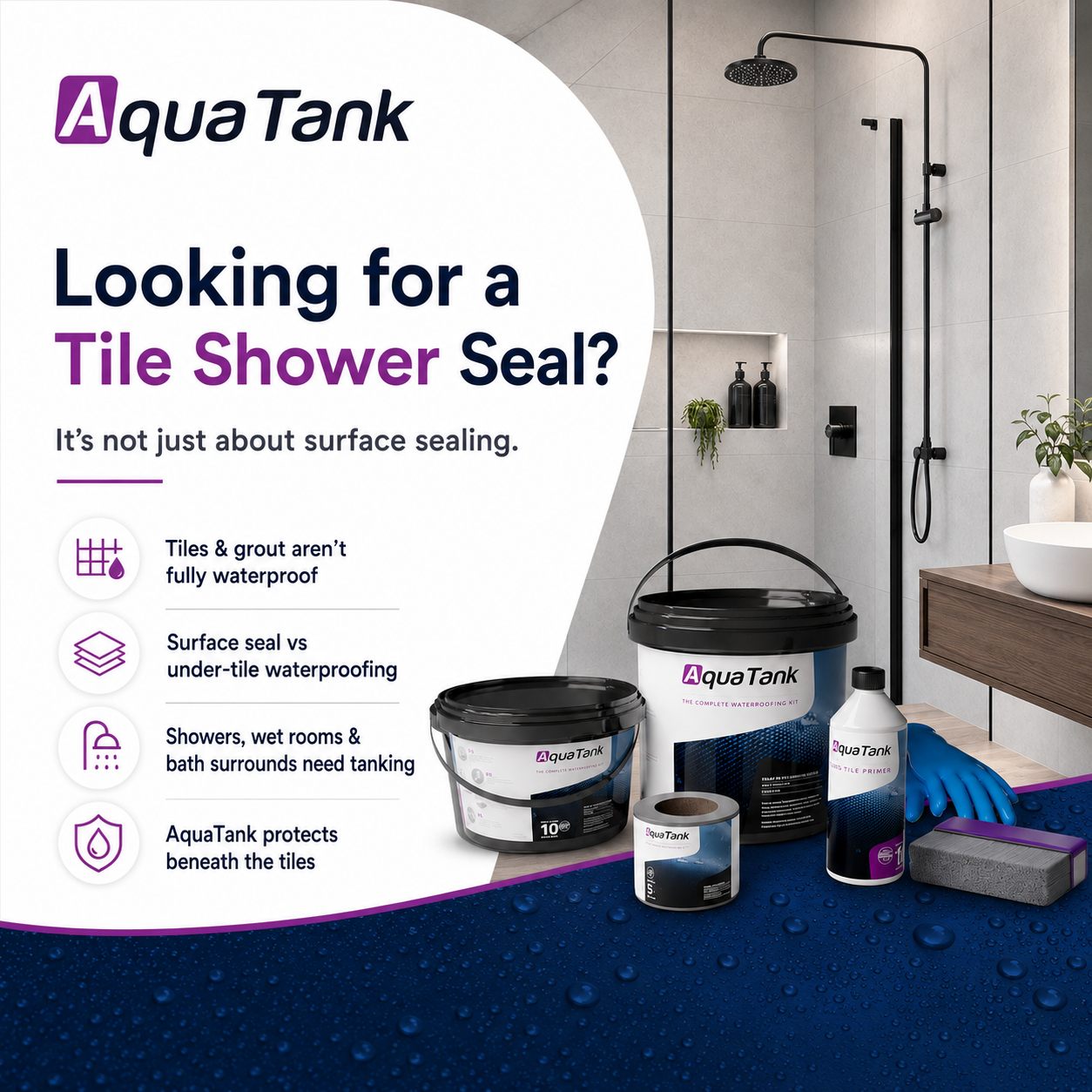
When customers search for a tile shower seal, they are often looking for a way to stop leaks, protect shower walls, or make sure a tiled shower area is properly waterproof. It is an understandable search term, but it can also lead to some confusion.
Many people assume that sealing a shower is simply about applying silicone around the tray, choosing water-resistant grout, or adding a surface sealant after the tiles have been installed. While these details are important, they are only part of the picture.
For a tiled shower to perform properly, the most important waterproofing layer should be installed before the tiles are fitted. This is where a tanking system, such as the AquaTank Tanking Kit, plays an essential role.
AquaTank is designed to create a waterproof barrier beneath tiled finishes, helping protect shower walls, wet room floors, corners, junctions, and other vulnerable areas from moisture ingress.
What Is a Tile Shower Seal?
The phrase “tile shower seal” can mean different things depending on the customer’s level of knowledge.
Some customers may be referring to:
Silicone sealant around a shower tray
Grout sealer applied over grout joints
Waterproof tape used in corners and junctions
A waterproof membrane beneath tiles
A complete shower tanking kit
This is why it is important for retailers, tilers, and DIY customers to understand the difference between surface sealing and full waterproofing.
A silicone seal or grout sealer can help protect visible joints, but it does not provide a complete waterproofing system behind the tiles. In high-moisture areas such as showers and wet rooms, the waterproofing layer should sit beneath the tiled finish, protecting the substrate before water has the chance to cause damage.
Are Shower Tiles Waterproof?
Ceramic and porcelain tiles are highly water-resistant, but a tiled shower is not automatically waterproof.
A shower installation includes more than just the tiles. It also includes grout joints, adhesive, corners, pipe penetrations, wall-to-floor junctions, silicone seals, and the substrate behind the tiled surface. These areas can all become potential routes for moisture.
Grout, even when correctly applied, is not intended to act as the only waterproof barrier in a shower. Over time, small amounts of moisture can pass through grout lines, especially where the shower is used daily. Silicone can also break down, shrink, split, or pull away from surfaces.
If there is no waterproofing system beneath the tiles, moisture can reach plasterboard, backer boards, timber floors, screeds, or other backgrounds. This can lead to damp, mould, adhesive breakdown, loose tiles, and costly repairs.
A tile shower seal should therefore be viewed as more than just a visible sealant. The most reliable protection starts underneath the tiles.
Surface Sealants vs Under-Tile Waterproofing
One of the most important distinctions to make is the difference between surface sealing and under-tile waterproofing.
A surface sealant is usually applied after tiling. This might include silicone around a tray, bath, or internal corner, or a grout sealer used to help reduce staining and water absorption in grout joints. These products can be useful, but they remain exposed to wear, cleaning chemicals, movement, and regular water contact.
Under-tile waterproofing is different. It is installed before the tiles are fixed and forms a protected waterproof layer behind the finished surface.
A tanking kit like AquaTank is designed for this purpose. It helps create a continuous waterproof barrier across the prepared surface, with reinforcing tape and corner pieces used to strengthen the areas where leaks are most likely to occur.
For showers, wet rooms, and bath surrounds, under-tile waterproofing provides a far more robust approach than relying on silicone and grout alone.
Why Showers Need Proper Waterproofing
Showers are one of the highest-risk areas in any bathroom because they are exposed to direct water every day. Water does not only hit the tiles; it runs down walls, collects in corners, splashes onto floors, and sits around trays, valves, niches, and junctions.
The most vulnerable areas include:
Wall-to-wall corners, where movement and water exposure can weaken grout or silicone.
Wall-to-floor junctions, especially in wet rooms and low-level shower areas.
Around shower valves and pipe penetrations, where small gaps can allow water to track behind the tiles.
The base of shower walls, where water often collects and silicone seals are under constant pressure.
Recessed niches and shelves, where horizontal surfaces can hold water if not properly tanked and tiled.
A visible tile shower seal may help finish some of these areas, but it should not be the only line of defence. Waterproofing beneath the tiles helps protect the structure even if the surface seal begins to wear over time.
What Is an Under Tile Shower Seal?
The related term “under tile shower seal” is a useful way to explain tanking to customers. In practical terms, an under tile shower seal refers to the waterproofing system installed behind the tiles before the adhesive and tile finish are applied.
This can include:
A liquid waterproofing membrane
Reinforcing tape for joints and corners
Pre-formed corners for vulnerable areas
Sealing details around pipes and junctions
A waterproof surface ready for tiling once cured
The AquaTank Tanking Kit provides these key elements in one system. The liquid membrane forms the main waterproof layer, while the reinforcing components help protect the details where leaks commonly begin.
This is especially important in showers because the tiled surface is constantly exposed to water, steam, temperature changes, and cleaning products.
How AquaTank Helps Create a Waterproof Shower Area
The AquaTank Tanking Kit is designed to be used before tiling in wet areas such as showers, wet rooms, bathrooms, bath surrounds, and high-moisture tiled spaces.
Rather than treating waterproofing as a final surface detail, AquaTank helps protect the background before the tiles are installed.
The system is designed to help:
Create a continuous waterproof barrier beneath tiles.
Reinforce corners, joints, and wall-to-floor junctions.
Protect moisture-sensitive substrates from water ingress.
Reduce reliance on grout and silicone as the only protection.
Support long-lasting tiled shower installations.
Provide a straightforward waterproofing solution for retailers, tilers, and competent DIY users.
For retailers, AquaTank can be explained as the product customers need when they ask for a “tile shower seal” but actually require a proper waterproofing system. For tilers, it offers a practical method for preparing shower areas before tiling begins.
When Should You Use a Tile Shower Seal or Tanking Kit?
A tile shower seal or tanking system should be considered anywhere the tiled surface will be exposed to regular water.
The most important areas include:
Shower Enclosures
Shower enclosures should always be treated as wet zones. Walls around the shower, the lower sections near the tray, pipe openings, internal corners, and the tray junction all need careful waterproofing.
A tanking kit helps protect these areas before tiles are fitted, reducing the risk of moisture reaching the wall behind.
Walk-In Showers
Walk-in showers often have less physical separation between the shower area and the wider bathroom. Water can splash further across floors and walls, so waterproofing needs to be considered across a wider area.
AquaTank can be used to help protect the critical wet zones before tiling, especially wall-to-floor junctions and areas around drainage.
Wet Rooms
In a wet room, waterproofing is essential. The entire floor may be exposed to water, and the drainage area must be carefully sealed. Tiles and grout are not enough to protect the floor structure on their own.
A complete tanking system helps create the under-tile waterproof barrier needed for wet room installations.
Bath and Shower Areas
Where a shower is installed above a bath, the surrounding walls receive regular water exposure. The bath edge and corners are particularly vulnerable because water can sit along the joint and eventually work behind failed silicone.
Tanking the bath surround before tiling provides an additional layer of protection.
Bathroom Floors
Bathroom floors are exposed to wet feet, spills, cleaning water, and occasional leaks. Tanking can help protect the substrate, especially where timber floors, boards, or moisture-sensitive backgrounds are used.
Common Mistakes When Sealing a Tiled Shower
Many shower leaks happen because waterproofing is treated as a finishing detail rather than part of the preparation.
Common mistakes include:
Relying only on grout to stop water.
Using silicone as the main waterproofing method.
Forgetting to reinforce internal corners and wall-to-floor junctions.
Not sealing around pipe penetrations properly.
Tanking only part of the shower area and leaving vulnerable sections exposed.
Applying tiles before the waterproofing membrane has fully cured.
Using products from different systems without checking compatibility.
A complete tanking system helps reduce these risks by giving customers and installers a clearer process to follow.
Can You Seal a Shower After Tiling?
You can reseal visible areas of a shower after tiling, such as replacing silicone or applying a grout sealer. However, this is not the same as tanking the shower before tiling.
If water is already getting behind the tiles because there is no waterproofing system beneath them, surface sealing may only provide a temporary improvement. It does not repair hidden damage or create a continuous waterproof barrier behind the tiled surface.
This is why waterproofing should be planned before tiling begins. Once the tiles are installed, access to the most important protective layer is no longer possible without removing the tiled finish.
For new shower installations, prevention is much better than repair.
How Retailers Can Explain Tile Shower Sealing to Customers
When a customer asks for a tile shower seal, it is worth asking what they are trying to achieve.
Useful questions include:
Are you installing a new shower or repairing an existing one?
Is the area a shower enclosure, walk-in shower, wet room, or bath surround?
What surface are you tiling onto?
Are you looking for silicone, grout sealer, waterproofing tape, or a full tanking kit?
Has the area already been tiled, or are you preparing before tiling?
These questions help identify whether the customer needs a surface sealant or a full waterproofing system.
For new tiled showers, retailers should explain that waterproofing beneath the tiles is the most important stage. A product like the AquaTank Tanking Kit can then be recommended as part of the complete shower tiling system, alongside suitable tile adhesive, grout, trims, movement joints, and backer boards if required.
Final Thoughts: The Best Tile Shower Seal Starts Beneath the Tiles
A visible seal around a shower tray or corner is important, but it should not be the only waterproofing in a tiled shower.
The most effective tile shower seal is the waterproofing system installed beneath the tiles before the finished surface is applied. This hidden layer helps protect the substrate, reduce the risk of leaks, and support a longer-lasting shower installation.
The AquaTank Tanking Kit provides a complete under-tile waterproofing solution for showers, wet rooms, bath surrounds, bathroom floors, and other high-moisture tiled areas.
When customers ask for a tile shower seal, the best advice is simple: seal what you can see, but waterproof what you cannot. For reliable results, start with AquaTank before tiling.