

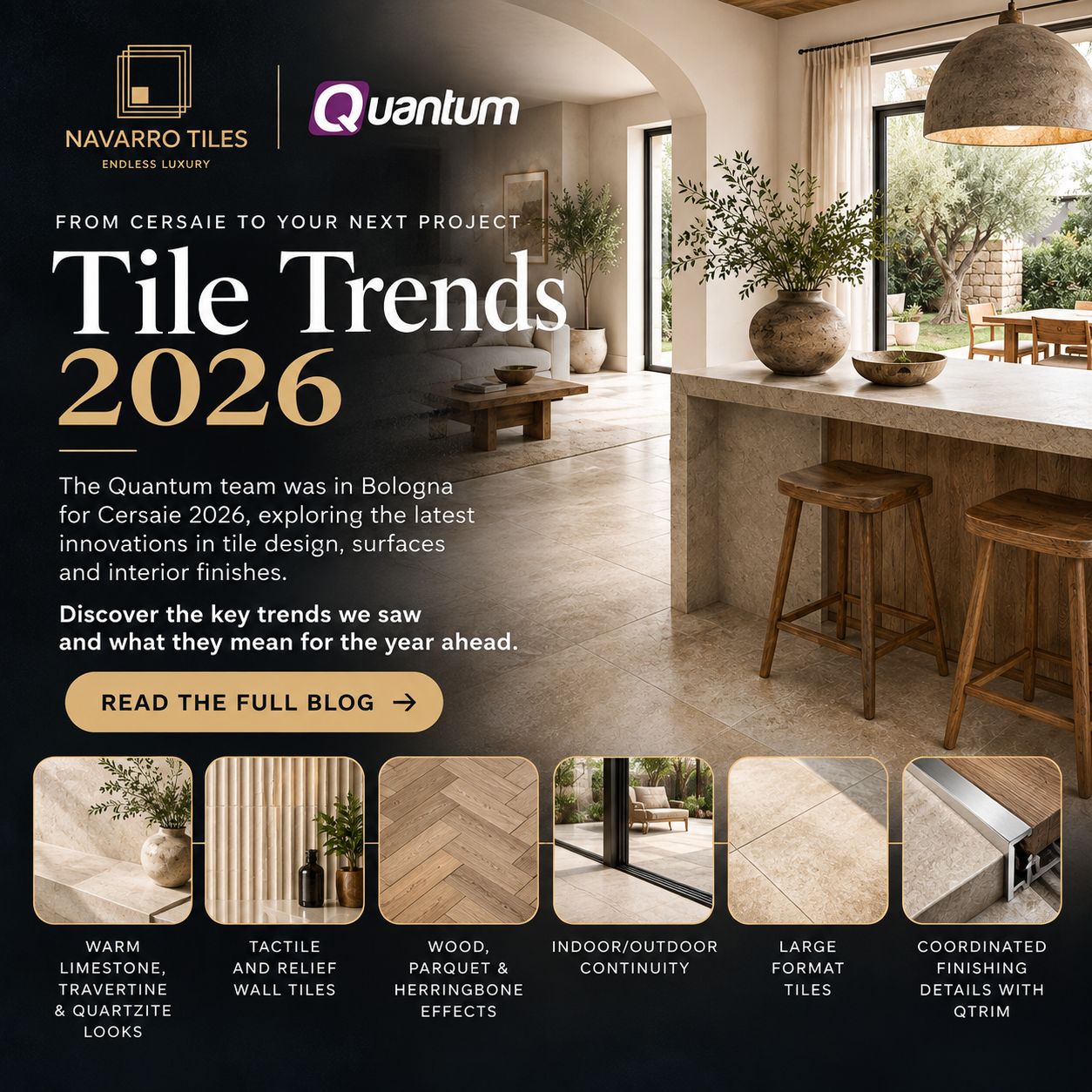
What are the biggest tile trends for 2026? After visiting Cersaie 2026 in Bologna, the Quantum team saw six clear trends emerging: warm limestone, travertine and quartzite looks; tactile and relief wall tiles; wood, parquet and herringbone effects; indoor-outdoor continuity; large-format tiles; and carefully coordinated finishing details.
Last week, members of the Quantum team travelled to Bologna for Cersaie 2026, one of the world’s leading exhibitions for ceramic tiles, surface design and bathroom furnishings.
For us, visiting Cersaie isn’t simply about seeing what’s new.
It’s an opportunity to meet manufacturers, explore emerging technologies and understand which international tile trends are likely to influence retailers, designers, architects, installers and homeowners across the UK and Ireland.
And this year’s show had a very clear direction.
Tile design in 2026 is becoming warmer, more tactile and increasingly coordinated. Instead of looking at individual tiles in isolation, manufacturers are creating complete surface schemes built around natural materials, texture and continuity.
Here are the six trends that stood out most to the Quantum team.
1. Warm Limestone, Travertine and Quartzite Tiles
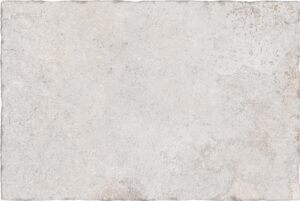 One of the strongest tile trends for 2026 is the move towards warmer interpretations of natural stone.
Limestone, travertine and quartzite-inspired porcelain featured heavily throughout Cersaie, with beige, sand, cream and earthy neutral colours appearing across many collections.
The overall effect is softer and warmer than the cool grey stone looks that have dominated interiors for a number of years.
Why are warm stone-effect tiles becoming popular?
Warm stone-effect porcelain combines the visual character of natural materials with the performance and practicality of porcelain.
Travertine-inspired surfaces can create a relaxed, Mediterranean feel, while limestone looks provide a softer and more understated finish. Quartzite effects can introduce more movement and variation while maintaining a natural palette.
These materials can also work across bathrooms, kitchens, living spaces and commercial interiors.
For tile retailers, there is an opportunity to move beyond displaying individual tiles and instead show customers how warm stone effects can work alongside timber, textured walls and coordinated trims.
2. Tactile and Relief Wall Tiles
 Another major trend at Cersaie 2026 was texture.
Wall tiles are becoming increasingly three-dimensional, with fluted designs, linear reliefs, raised surfaces and subtle structures bringing depth to otherwise simple colour palettes.
Instead of creating a feature wall solely through pattern or colour, designers can use the surface itself.
Light moving across a textured tile creates shadow and variation, allowing relatively neutral walls to become a design feature without overwhelming the room.
This was particularly effective when tactile surfaces were paired with warm limestone and travertine looks.
Are textured wall tiles a 2026 bathroom trend?
Yes. Textured and relief wall tiles are one of the most noticeable bathroom tile trends for 2026, particularly when combined with neutral stone effects and simple, tonal colour schemes.
The result is a bathroom that feels more architectural and considered without relying on bold patterns.
3. Wood, Parquet and Herringbone Tile Effects
 Wood-effect porcelain continues to evolve.
At Cersaie, we saw increased use of parquet-inspired layouts, herringbone tiles and detailed timber effects, giving designers more ways to introduce the warmth of wood into tiled spaces.
Herringbone and parquet formats are particularly useful for introducing movement and visual interest.
Larger plank-style porcelain tiles, meanwhile, can create the appearance of a continuous timber floor while offering the practical benefits associated with porcelain.
One of the most interesting developments is the way wood looks are being combined with stone rather than treated as a completely separate design style.
Warm limestone floors, for example, can sit alongside wood-effect areas or furniture to create a layered natural palette.
For retailers, this creates an opportunity to display coordinated tile collections rather than organising showrooms solely by individual product type.
4. Indoor and Outdoor Tile Continuity
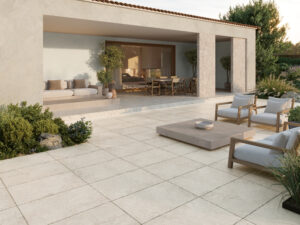 The connection between indoor and outdoor living remains an important part of contemporary design.
At Cersaie 2026, manufacturers continued to develop porcelain collections that allow similar or matching designs to run from interior floors into patios, terraces and external living areas.
What does indoor-outdoor tile continuity mean?
Indoor-outdoor tile continuity means using coordinated porcelain surfaces inside and outside the property to create a consistent visual appearance between the two spaces.
For example, a kitchen or living area might use an interior porcelain tile with a coordinating external version continuing through doors onto a patio.
This can make both areas feel larger and create a stronger relationship between the home and garden.
It is also an important commercial opportunity for tile retailers and merchants.
Rather than supplying only an internal floor, the conversation can expand to include exterior porcelain, installation products, preparation materials and the finishing accessories required to complete the project.
5. Large-Format Tiles Continue to Grow
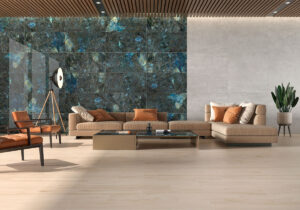 Large-format tiles and porcelain slabs were impossible to ignore at Cersaie.
Larger formats allow stone, marble and mineral graphics to be shown with fewer interruptions, while reduced grout joints can create the clean, continuous appearance increasingly associated with premium interiors.
We expect large-format porcelain to remain an important part of both residential and commercial tile design during 2026.
But larger tiles also highlight something that is fundamental to the Quantum approach:
Choosing the tile is only one part of creating a successful installation.
Substrate preparation, handling, cutting, adhesive coverage, movement management and levelling all become increasingly important as tile sizes increase.
That is why Quantum’s offer extends beyond the finished surface.
From boards and membranes to levelling systems, tools, trims and installation products, the aim is to provide the products required throughout the tiling process — from subfloor to surface.
6. Coordinated Tile Trim Finishes with QTrim
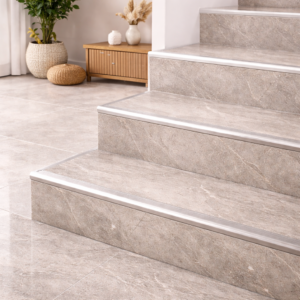 One of our biggest takeaways from Cersaie was the attention being given to the complete finished space.
Tiles are increasingly being selected alongside brassware, furniture, sanitaryware, handles, lighting and other interior finishes.
That means details such as the tile trim need to be considered as part of the design rather than chosen at the very end of the installation.
This is where QTrim becomes particularly relevant.
Coordinating QTrim finishes with warm stone tiles, timber effects, metallic details and bathroom finishes can help create a much more cohesive completed installation.
A tile trim may only form a small part of the overall room, but it can have a significant effect on how professional and considered the finished installation looks.
What Are the Main Tile Trends for 2026?
Based on what the Quantum team saw at Cersaie 2026, the main tile trends for the year ahead are centred around natural materials, texture and continuity.
Warm limestone, travertine and quartzite effects are replacing colder palettes. Textured wall tiles are adding depth. Wood and herringbone effects are bringing warmth and movement. Indoor and outdoor porcelain is becoming increasingly coordinated, while large-format tiles continue to create cleaner, more continuous surfaces.
At the same time, finishing details are becoming increasingly important.
Rather than selecting individual products independently, designers and consumers are building complete schemes where the tile, texture, format, trim and surrounding finishes all work together.
From Cersaie Inspiration to the Quantum Range
For Quantum, visiting Cersaie is about identifying the ideas that have genuine potential for our customers.
Through Navarro Tiles, QTrim and our wider portfolio of professional tiling products, our goal is to help retailers, merchants and tiling professionals respond to changing design trends while also supplying the products needed to install those surfaces correctly.
That means looking beyond the tile itself.
From preparation and waterproofing through to installation, finishing and the final surface, we’re continuing to build an offer that supports the complete tiling project.
Our team is now working through the collections, finishes and ideas we saw in Bologna and considering what they could mean for our customers across Northern Ireland, Ireland and Great Britain.
There is plenty more to come.
Tile Trends 2026: Frequently Asked Questions
What tiles are in style for 2026?
Warm stone-effect porcelain, including limestone, travertine and quartzite looks, is a major direction for 2026. Textured walls, wood effects, herringbone layouts, large-format tiles and coordinated indoor-outdoor porcelain are also important trends.
What are the main bathroom tile trends for 2026?
Bathroom tile trends for 2026 include warm neutral stone effects, tactile and three-dimensional wall tiles, larger formats, timber-inspired surfaces and more carefully coordinated trims and bathroom finishes.
Are large-format tiles still popular in 2026?
Yes. Large-format porcelain remains a significant trend because it can reduce the number of grout joints and allow stone and marble-inspired designs to appear more continuous.
Are herringbone tiles still on trend?
Herringbone remains popular, particularly as part of the wider move towards wood, parquet and natural-material inspired interiors. Herringbone formats can introduce texture and movement without requiring strong colours.
What was Cersaie 2026?
Cersaie 2026 was the international exhibition for ceramic tile and bathroom furnishings held in Bologna, Italy. The show brings together manufacturers, designers and businesses from across the international ceramic and surface industry.
Where can trade customers source tiles and tiling products?
Quantum supplies the trade through retailers, wholesalers, builders’ merchants and online retailers, with a product portfolio covering tiles, trims, tools, preparation and installation products. Contact the Quantum team to find your nearest stockist or discuss becoming a customer.