


How to Choose the Right Tile Levelling Clips, Wedges and Spacers for a Professional Finish
Tile levelling systems have become an essential part of modern tiling. As tiles have become larger, thinner and more precise, the need for accurate installation has increased. Whether working with large format porcelain, rectified tiles, natural stone, ceramic wall tiles or commercial floor areas, achieving a flat and evenly spaced finish is vital.
A good tile levelling system helps reduce lippage, maintain consistent grout joints and hold tiles in place while the adhesive cures. For professional tilers, this means a cleaner finish, fewer callbacks and greater confidence on site. For retailers, tile levelling systems are an important add-on product that customers need alongside adhesives, spacers, trims and cutting tools.
In this guide, we look at the different types of tile levelling systems available, how they work, when to use them and why clip and wedge systems such as the Tylix range are a practical choice for professional results.
What Is a Tile Levelling System?
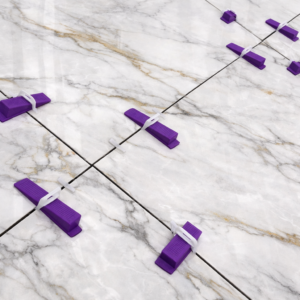 A tile levelling system is designed to help adjacent tiles sit at the same height during installation. It usually works by applying controlled pressure across two or more tiles, holding them level while the adhesive sets.
This is different from standard tile spacers, which are mainly used to control grout joint width. Spacers help keep tiles evenly spaced, but they do not actively pull tiles into the same plane or prevent lippage in the same way as a levelling system.
Tile levelling systems are especially useful when installing:
Large format porcelain tiles, rectified tiles, floor tiles, wall tiles, plank-style tiles, natural stone, tiles with minimal grout joints, and tiles in areas where light reflection makes uneven edges more visible.
What Is Tile Lippage?
Tile lippage occurs when one tile edge sits higher than the tile next to it. Even a small height difference can be noticeable, particularly on floors, glossy tiles, large format tiles or surfaces lit by natural light or spotlights.
Common causes of lippage include uneven substrates, inconsistent adhesive bed depth, tile bowing, incorrect trowel technique, movement during curing and tiles that vary slightly in thickness.
A tile levelling system does not replace good preparation, but it does help control the tile surface during installation. Used correctly, it can significantly reduce the risk of uneven tile edges.
Why Use a Tile Levelling System?
Tile levelling systems offer several practical benefits for both professional tilers and confident DIY users.
They help create a flatter surface, reduce lippage, improve grout joint consistency, keep tiles stable while adhesive cures, support large format tile installation, reduce snagging and callbacks, and help achieve a more professional finish.
For tilers, this can save time during installation and reduce the need to constantly lift, adjust and re-bed tiles. For customers, the result is a cleaner, more premium-looking tiled surface.
- Clip and Wedge Tile Levelling Systems
Clip and wedge systems are among the most popular tile levelling systems used by professional tilers. They are simple, reliable and suitable for a wide range of wall and floor tile installations.
The system usually consists of two parts: a levelling clip and a reusable wedge. The clip sits beneath the edge of the tile, while the wedge slides through the clip and applies pressure across the tile surface. This pressure helps bring neighbouring tiles into alignment and keeps them level while the adhesive sets.
Once the adhesive has cured, the clip is removed by striking it in the direction of the grout joint. The lower part of the clip remains beneath the tile, while the top section breaks away cleanly. The wedges can then be reused.
Introducing the Tylix Clip and Wedge Levelling System
The Tylix Clip and Wedge Levelling System is designed to help tilers achieve a smooth, even and professional tiled finish. It is ideal for reducing lippage on modern tile installations and is particularly useful when working with large format porcelain, rectified tiles and areas where a flat surface is essential.
The Tylix levelling system is straightforward to use and helps keep tiles securely aligned while the adhesive cures. The clips help control spacing, while the wedges apply even pressure across the tile surface.
This makes the Tylix Clip and Wedge system a practical choice for:
Large format floor tiles, bathroom walls and floors, wetrooms, kitchens, commercial installations, porcelain tiles, ceramic tiles and rectified-edge tiles.
For retailers, Tylix levelling clips and wedges are an excellent trade counter product because they are easy to demonstrate, simple to explain and frequently purchased alongside adhesives, spacers and tiling tools.
How to Use a Clip and Wedge Levelling System
Although each product should always be used in line with its own instructions, most clip and wedge systems follow a similar process.
First, spread the tile adhesive using the correct notched trowel for the tile format and substrate. Place the first tile firmly into the adhesive bed, ensuring good coverage.
Next, position the levelling clips beneath the tile edge. The number of clips required will depend on the tile size, but larger tiles usually need more clips along each edge.
Place the next tile into position, butting it against the clips. Insert the wedge through each clip and tighten until the tiles are held level. The wedge should be firm, but not overtightened.
Allow the adhesive to cure fully before removing the clips. Once set, strike the clips in the direction of the grout joint using a rubber mallet or suitable tool. The clip should break away cleanly, leaving the joint ready for grouting.
Benefits of Tylix Clip and Wedge Systems
The Tylix clip and wedge system offers a range of practical benefits for modern tiling.
It helps reduce lippage, supports consistent grout joints, keeps tiles stable during curing, improves the final appearance of tiled surfaces, supports large format tile installation, provides reusable wedges, and helps tilers work more efficiently.
The system is also easy to understand, making it suitable for both professional tilers and knowledgeable DIY customers looking to improve finish quality.
LevTec Clip and Wedge Systems
LevTec is another well-known clip and wedge system used by tilers for creating level tiled surfaces. The system includes clips, wedges and pliers, which work together to hold tiles in place and reduce movement while adhesive sets.
LevTec clips are designed with bevelled clip edges for ease of use, while the reusable wedges help provide accuracy across the installation. The breakpoint is positioned below the base plate, allowing clean removal once the adhesive has set.
A typical LevTec installation process involves spreading the tile adhesive, placing the clips beneath the tile edge, setting the adjacent tile firmly into place, inserting the wedge, allowing the adhesive to cure and then removing the clip by striking it in the direction of the grout joint.
Clip and wedge systems such as Tylix and LevTec are popular because they combine levelling and spacing in a simple, practical format.
-
Spin Tile Levelling Systems
Spin systems use a threaded stem and a reusable cap or cylinder to level tiles. The stem sits between the tiles and acts as a spacer, while the cap is twisted down until it applies pressure to the surface of the tiles.
This pressure helps bring the tiles into alignment. Once the adhesive has set, the top section is removed, leaving the joint ready for grouting.
Spin systems can be useful for installers who prefer hand tightening rather than using wedges or pliers. Some systems also include scratch-resistant caps or protective discs to help prevent damage to the tile surface during tightening.
Spin tile levelling systems are often used for wall tiles, floor tiles and larger format tiles where controlled pressure is needed across the surface.
-
Standard Tile Spacers
Standard tile spacers are not levelling systems in the same sense as clips and wedges or spin systems, but they remain an essential part of tiling. Their main purpose is to maintain consistent grout joint width.
Traditional cross-shaped spacers are used at the intersection where four tiles meet. They help maintain neat and even grout lines and are widely used across wall and floor tiling projects.
Spacers can also be used in a matchstick style, which is useful where tile corners do not meet at a four-way intersection. T-shaped spacers are commonly used where three tiles meet, such as at edges, borders or brick bond layouts.
Spacers are particularly useful for ceramic wall tiles, metro tiles, splashbacks, smaller format tiles, and installations where levelling pressure is not required.
-
Specialist Tile Spacers for Modern Tile Shapes
Tile design has changed significantly in recent years. Alongside traditional square and rectangular tiles, many projects now feature hexagonal, octagonal and shaped tiles.
These layouts often need specialist spacers to keep the pattern consistent. Y-shaped spacers and hexagonal spacers are designed to work with non-standard tile shapes, helping installers achieve even joints across decorative layouts.
Specialist spacers are particularly useful for feature walls, bathroom floors, geometric tile designs, mosaic-style layouts and patterned installations.
Tile Levelling Systems vs Tile Spacers: What Is the Difference?
Although tile levelling systems and tile spacers are sometimes discussed together, they perform different roles.
Tile spacers control the width of the grout joint. They help ensure tiles are evenly spaced, but they do not actively level the tile surface.
Tile levelling systems control both spacing and tile height. They apply pressure across adjacent tiles to help bring them into the same plane, reducing lippage while the adhesive cures.
For simple wall tiling with smaller ceramic tiles, standard spacers may be enough. For large format porcelain, rectified tiles or premium floor installations, a tile levelling system is usually the better choice.
When Should You Use a Tile Levelling System?
A tile levelling system is recommended whenever the tile size, material or installation conditions make lippage more likely.
It is particularly useful for large format tiles, porcelain floor tiles, rectified tiles, plank tiles, glossy tiles, natural stone, underfloor heating installations, commercial floors and areas with strong directional lighting.
Large tiles can be more difficult to keep level because they cover more surface area and can be affected by minor substrate variations. A levelling system helps control the installation and improve the final finish.
Best Practice Tips for Using Tile Levelling Clips and Wedges
A tile levelling system is a helpful tool, but it should always be used alongside correct installation methods.
Before tiling, ensure the substrate is clean, stable, suitable and as flat as possible. Use the correct adhesive for the tile and substrate, and choose the right trowel size to achieve adequate coverage.
Do not use levelling clips to compensate for a badly prepared surface. The system is designed to fine-tune tile alignment, not correct major substrate issues.
Avoid overtightening wedges or caps, as this can disturb the adhesive bed or place too much stress on the tile. Always remove clips only after the adhesive has fully cured, and strike them in the direction of the grout joint for clean removal.
Choosing the Right Tile Levelling System
The best tile levelling system depends on the type of installation and the installer’s preference.
Clip and wedge systems such as Tylix are a great all-round option for professional tilers because they are simple, effective and suitable for a wide range of tile formats.
Spin systems are useful where installers prefer hand tightening and controlled surface pressure.
Standard spacers remain essential for maintaining consistent grout lines, particularly on smaller tiles and decorative layouts.
In many cases, tilers will carry a combination of levelling clips, reusable wedges, standard spacers and specialist spacers to cover different site requirements.
Why Retailers Should Stock Tile Levelling Systems
Tile levelling systems are a valuable product category for tile retailers and trade counters. Customers buying tiles will often also need adhesive, grout, trims, spacers and installation tools. Levelling systems sit naturally within this complete tiling solution.
Stocking Tylix tile levelling clips, wedges and related accessories can help retailers increase basket value, support better installation results, reduce customer issues caused by lippage, and provide a more complete trade offering.
They are particularly relevant when selling large format porcelain, rectified tiles, premium floor tiles and installation accessories.
Quantum Group NI – Wholesale Suppliers of Professional Tile Levelling Systems
At Quantum Group, we supply a wide range of tiling tools and accessories to retailers throughout the UK and Ireland. Our product offering includes professional tile levelling systems, spacers, diamond blades, PPE, trims, adhesives and installation accessories designed to support modern tiling projects.
The Tylix Clip and Wedge Levelling System is a practical and reliable choice for tilers looking to reduce lippage and achieve a professional finish across wall and floor installations.
Whether your customers are professional tilers, contractors or confident DIY users, stocking a complete range of levelling systems and spacers helps ensure they have the right products for every project.
To find out more about stocking Tylix tile levelling products or to speak to your Quantum Group area sales manager, contact our team today.